Featured Answer: What Is Frankincense Hydrosol Used For?
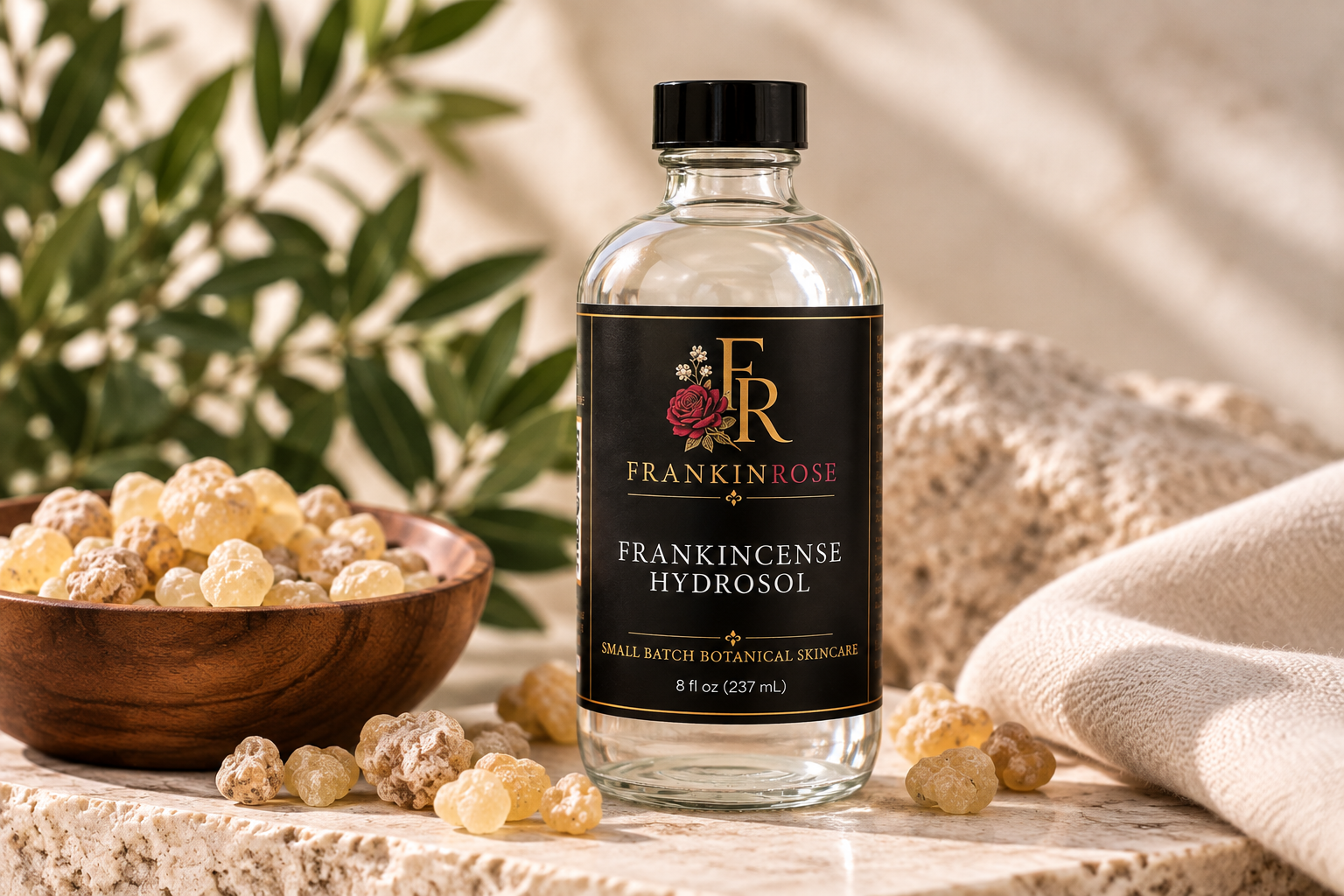
Frankincense hydrosol is primarily used as a gentle botanical facial mist, toner, and refreshing step in a daily skincare routine. It can be misted directly onto clean skin, applied before facial oils or moisturizers, used to refresh the face throughout the day, or incorporated into a simple botanical skincare routine. Unlike frankincense essential oil, a true frankincense hydrosol is the aromatic water collected during the distillation of frankincense resin.
At FrankinRose, we appreciate frankincense hydrosol for its simplicity and versatility. It provides a convenient way to incorporate a traditional botanical into modern skincare without applying concentrated frankincense essential oil directly to the skin.
What Is Frankincense Hydrosol?
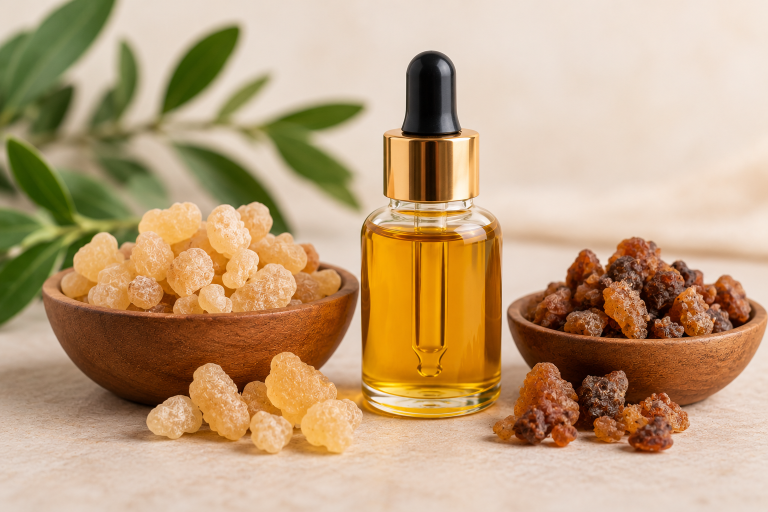
Frankincense hydrosol is an aromatic botanical water produced through distillation of frankincense resin. Frankincense itself is a fragrant resin obtained from trees belonging to the Boswellia genus.
During distillation, water is heated to create steam. As the steam interacts with the botanical material, it carries volatile aromatic components through the distillation system. The vapor is then cooled and condensed back into liquid.
The resulting aromatic water is known as a hydrosol.
Although hydrosols and essential oils may originate from the same botanical material, they are distinctly different products. Essential oils are highly concentrated mixtures of oil-soluble aromatic compounds, while hydrosols are primarily water containing small amounts of water-compatible and aromatic components captured during distillation.
This makes frankincense hydrosol particularly convenient for use as a facial mist or botanical toner.
What Does Frankincense Hydrosol Do for Your Face?
One of the most popular uses for frankincense hydrosol is as part of a daily facial skincare routine.
A light mist can leave the skin feeling refreshed and lightly hydrated. Because hydrosol is water-based, it can also provide a slightly damp layer before applying other skincare products.
We especially like using botanical hydrosols before facial oils. Applying an oil to slightly damp skin can make it easier to distribute a small amount of oil evenly across the face.
Frankincense hydrosol can therefore serve several simple purposes in one routine:
- Refreshes the skin with a lightweight botanical mist
- Adds water-based moisture before oils or moisturizers
- Provides a simple toner step after cleansing
- Prepares slightly damp skin for facial oil application
- Offers the distinctive aroma of distilled frankincense
- Can be reapplied throughout the day as a facial mist
Rather than treating frankincense hydrosol as a complicated skincare treatment, we consider it a versatile botanical step that can easily fit between cleansing and moisturizing.
Using Frankincense Hydrosol as a Facial Toner
Frankincense hydrosol can be used as a botanical facial toner after cleansing.
After washing the face, lightly mist the hydrosol over the skin. Allow it to absorb naturally or gently press it into the skin with clean hands.
Unlike traditional toners that may contain numerous ingredients, fragrances, exfoliating acids, or alcohol, a hydrosol-based toner can provide a much simpler skincare experience.
The word “toner” covers a wide range of products. Some toners are formulated to exfoliate, some contain humectants and moisturizing ingredients, and others primarily provide a refreshing water-based step.
Frankincense hydrosol falls into the latter category. Its purpose is not to aggressively exfoliate or strip the skin. Instead, it provides a light botanical mist that can be incorporated between cleansing and moisturizing.
Using Frankincense Hydrosol Before Facial Oil
One of our favorite ways to use frankincense hydrosol is immediately before applying a botanical facial oil.
Water and oil play different roles in a skincare routine. A facial oil can help soften the skin and reduce moisture loss, while a hydrosol provides a water-based layer.
After cleansing:
- Lightly mist frankincense hydrosol over the face.
- Leave the skin slightly damp.
- Apply a few drops of facial oil.
- Gently press or massage the oil over the face and neck.
This method can also help a small amount of facial oil spread more easily.
At FrankinRose, this approach fits particularly well with our philosophy of keeping botanical skincare routines simple and intentional rather than layering numerous unnecessary products.
Can Frankincense Hydrosol Be Used as a Face Mist?
Yes. Frankincense hydrosol can be used as a facial mist, making this one of the easiest ways to incorporate it into a skincare routine.
It does not have to be limited to morning and nighttime skincare.
A hydrosol mist can be used when the skin simply feels like it needs a refreshing spritz. Some people enjoy keeping botanical mists available at their vanity, desk, or alongside their regular skincare products.
Hold the bottle several inches away from the face, close the eyes, and apply a light, even mist.
The goal is not to soak the skin. A few light sprays are generally enough to create a fine layer across the face.
Can You Use Frankincense Hydrosol Every Day?
Frankincense hydrosol can generally be incorporated into a daily skincare routine when the formula is appropriate for the individual’s skin.
It may be used in the morning, evening, or both.
A simple routine could look like this:
Morning: Cleanse → Frankincense Hydrosol → Moisturizer or Facial Oil → Sunscreen
Evening: Cleanse → Frankincense Hydrosol → Serum, Moisturizer, or Facial Oil
People with sensitive skin should introduce any new skincare product gradually and discontinue use if irritation develops. A patch test is also a sensible precaution when trying a new botanical product.
Is Frankincense Hydrosol the Same as Frankincense Essential Oil?
No. Frankincense hydrosol and frankincense essential oil are different products.
This distinction is particularly important when shopping for frankincense skincare.
Frankincense essential oil is the concentrated oil fraction obtained during distillation. Because essential oils are concentrated, they normally require appropriate dilution before topical use.
Frankincense hydrosol is predominantly water.
A genuine hydrosol is also different from simply taking water and adding drops of frankincense essential oil to it. Oil and water do not naturally mix, and adding essential oil to water does not transform the mixture into a hydrosol.
A true frankincense hydrosol is a product of distillation.
This distinction is one reason we believe consumers should look carefully at ingredient descriptions when comparing botanical facial waters.
Frankincense Hydrosol vs. Frankincense Water
The terms frankincense hydrosol and frankincense water are sometimes used interchangeably, but the manufacturing method matters more than the name on the front of the bottle.
A distilled frankincense hydrosol comes from the distillation process.
A product marketed simply as “frankincense water” could potentially be formulated in other ways, such as water combined with fragrance or essential oil.
When shopping, look beyond the product title and determine how the frankincense water was actually made.
At FrankinRose, we believe botanical skincare should make it easy for customers to understand what they are putting on their skin.
What Does Frankincense Hydrosol Smell Like?
The aroma of frankincense hydrosol can surprise people who are familiar only with frankincense essential oil.
Because hydrosol contains a different balance and concentration of aromatic compounds, it may smell softer, lighter, earthier, and more water-like than concentrated frankincense essential oil.
Natural variations can also occur between batches.
Frankincense resin itself is a natural agricultural material. Its aromatic profile can vary depending on the botanical source, growing conditions, resin characteristics, storage, and distillation.
A hydrosol should therefore not be expected to smell exactly like a bottle of concentrated frankincense essential oil.
Why Is Frankincense Popular in Mature-Skin Routines?
Frankincense has become particularly popular in skincare products marketed toward mature skin, including facial oils, creams, serums, toners, and botanical mists.
However, it is important to separate traditional botanical use and cosmetic benefits from exaggerated claims.
Frankincense hydrosol should not be treated as a product that erases wrinkles or reverses skin aging. Skin aging involves complex biological processes influenced by factors including sun exposure, genetics, lifestyle, and normal changes in collagen and elastin.
Where frankincense hydrosol fits particularly well is in creating a gentle, enjoyable skincare routine.
For mature or dry-feeling skin, it can provide a refreshing water-based step before applying richer moisturizers or facial oils.
Can Frankincense Hydrosol Be Used With Rose Hydrosol?
Yes. Frankincense and rose hydrosols can complement one another beautifully in botanical skincare.
Rose hydrosol is another aromatic water traditionally used in facial care. Pairing rose and frankincense creates a botanical mist with characteristics from both distilled materials.
The combination can be particularly appealing for people who want a facial mist with a more complex botanical aroma than either hydrosol alone.
At FrankinRose, our interest in these botanicals comes from creating straightforward skincare that celebrates the plants and resins themselves rather than disguising them beneath an unnecessarily complicated formula.
When Should You Apply Frankincense Hydrosol?
There is considerable flexibility in when a hydrosol can be used.
After cleansing is one of the most practical times because the skin is clean and ready for the remainder of the skincare routine.
It can also be applied:
Before facial oil: Mist the face and apply oil while the skin remains slightly damp.
Before moisturizer: Use the hydrosol as a lightweight water-based step.
In the morning: Refresh the skin before completing the rest of the morning routine.
At night: Apply after cleansing and before heavier nighttime skincare products.
During the day: Use as a refreshing facial mist when desired.
There is no need to create an overly complicated routine around a hydrosol. Its versatility is one of its greatest advantages.
Does Frankincense Hydrosol Replace Moisturizer?
For most people, frankincense hydrosol should not be considered a replacement for moisturizer.
Hydrosol is predominantly water. Although it can make the skin feel refreshed and lightly hydrated immediately after application, it does not provide the same occlusive or emollient properties as facial oils and moisturizers.
People with dry or mature skin may especially benefit from following hydrosol with a moisturizer or facial oil.
Think of the hydrosol as the water-based botanical step and the moisturizer or facial oil as the step that helps soften the skin and reduce moisture loss.
Can Frankincense Hydrosol Be Used on the Neck and Décolletage?
Frankincense hydrosol does not have to stop at the jawline.
It can also be lightly misted over the neck and upper chest as part of the same skincare routine, provided the skin tolerates the product.
This makes it easy to extend facial skincare beyond the face without adding another complicated product.
After misting, follow with your preferred moisturizer or botanical oil if desired.
Can Men Use Frankincense Hydrosol?
Absolutely. Botanical skincare is not gender-specific.
Frankincense hydrosol can be incorporated into virtually any uncomplicated skincare routine. Its lightweight consistency also makes it appealing to people who dislike the heavy feeling associated with some creams and lotions.
It can be particularly convenient after washing the face or as a refreshing mist before applying moisturizer.
How Much Frankincense Hydrosol Should You Use?
More is not necessarily better.
A light, even mist is typically enough for facial application. The skin can be slightly damp without becoming saturated.
When applying facial oil afterward, only a small amount is generally needed because the oil can spread easily over damp skin.
This approach can make both products last longer while avoiding an unnecessarily heavy feeling on the face.
How Should Frankincense Hydrosol Be Stored?
Storage recommendations should always follow the instructions provided with the specific hydrosol because formulas and preservation systems differ.
Hydrosols are water-based products, which makes proper formulation, handling, packaging, and storage especially important. Water-containing cosmetics require considerably different microbial considerations than an anhydrous facial oil.
Keep the bottle tightly closed and avoid introducing contaminants into the product. Do not dilute a finished hydrosol with additional water unless the product is specifically designed to be diluted.
Any changes in odor, appearance, texture, or other unusual characteristics should be taken seriously.
What Should You Look for When Buying Frankincense Hydrosol?
Not every product containing the word “frankincense” is the same.
When choosing a frankincense facial water, we recommend looking for clear information about what the product contains and how it was produced.
A quality product description should make it reasonably easy to determine whether you are purchasing a true distilled hydrosol or merely water scented with frankincense fragrance or essential oil.
Look for straightforward information about:
- The frankincense botanical material used
- Whether the product is distilled
- The complete ingredient list
- Bottle size
- Storage instructions
- Intended cosmetic use
- Manufacturer or brand information
Transparency is especially valuable with botanical products because similar names can describe very different formulations.
Why Small-Batch Frankincense Hydrosol?
At FrankinRose, we focus on small-batch botanical skincare because it allows us to maintain a close connection with the ingredients and production process.
Frankincense begins as a remarkable natural resin rather than a laboratory-created fragrance. The resin comes from Boswellia trees and has been valued for generations for its distinctive aromatic character.
Transforming that resin into a hydrosol creates an entirely different experience from simply opening a bottle of essential oil.
The resulting botanical water is light, versatile, and easy to incorporate into everyday skincare.
For us, that simplicity is part of its appeal.
Frequently Asked Questions About Frankincense Hydrosol
What is frankincense hydrosol good for?
Frankincense hydrosol is commonly used as a botanical facial toner, refreshing face mist, and water-based skincare step before moisturizer or facial oil.
Can I spray frankincense hydrosol directly on my face?
A facial-grade frankincense hydrosol formulated and labeled for topical cosmetic use can be misted onto the face according to its directions. Close the eyes while spraying and consider patch testing before first use.
Should I use frankincense hydrosol before or after facial oil?
We prefer using hydrosol before facial oil. Mist the hydrosol onto clean skin and apply a few drops of facial oil while the skin is still slightly damp.
Can I use frankincense hydrosol morning and night?
It can generally be incorporated into both morning and evening skincare routines when tolerated by the skin and used according to the product directions.
Does frankincense hydrosol contain essential oil?
A true distilled hydrosol can naturally contain very small amounts of aromatic constituents associated with the distillation process, but hydrosol is not the same thing as concentrated frankincense essential oil.
Is frankincense hydrosol good for mature skin?
Frankincense hydrosol can make a pleasant addition to a mature-skin routine as a lightweight botanical mist before moisturizer or facial oil. Claims that a hydrosol can erase wrinkles or reverse aging should be viewed cautiously.
Can I combine frankincense hydrosol with other skincare products?
Yes. It can fit naturally between cleansing and products such as facial oils and moisturizers. When combining multiple active skincare products, follow their individual directions and introduce new products gradually.
Can frankincense hydrosol be combined with rose hydrosol?
Yes. Frankincense and rose hydrosols can be combined in a properly formulated botanical facial mist, bringing together two traditional aromatic botanicals in one skincare step.
A Simple Way to Add Frankincense to Your Skincare Routine
Frankincense has a long history as a valued aromatic resin, but incorporating it into modern skincare does not need to be complicated.
Frankincense hydrosol provides a lightweight way to experience distilled frankincense as part of an everyday skincare routine. It can be used after cleansing, before facial oil or moisturizer, as a botanical toner, or simply as a refreshing facial mist.
At FrankinRose, we believe some of the most enjoyable skincare routines are also the simplest. A thoughtfully made botanical hydrosol can become the bridge between cleansing and moisturizing while allowing the character of the original botanical material to remain at the center of the experience.
For those interested in frankincense skincare, hydrosol offers a distinctly different option from concentrated essential oils and oil-based facial products—and an exceptionally simple way to bring this ancient botanical into a modern daily routine.