As skin matures, its needs change. Natural oil production may decrease, moisture can escape more easily, and the skin may appear drier, thinner, or less supple than it once did. Choosing the right facial oil can help support the skin barrier while providing a smoother, more comfortable appearance.
At FrankinRose, we believe mature skin benefits from a thoughtful approach that focuses on nourishment, hydration, comfort, and maintaining a healthy-looking complexion rather than relying on a single miracle ingredient.
Featured Answer: What Is the Best Natural Oil for Mature Skin?
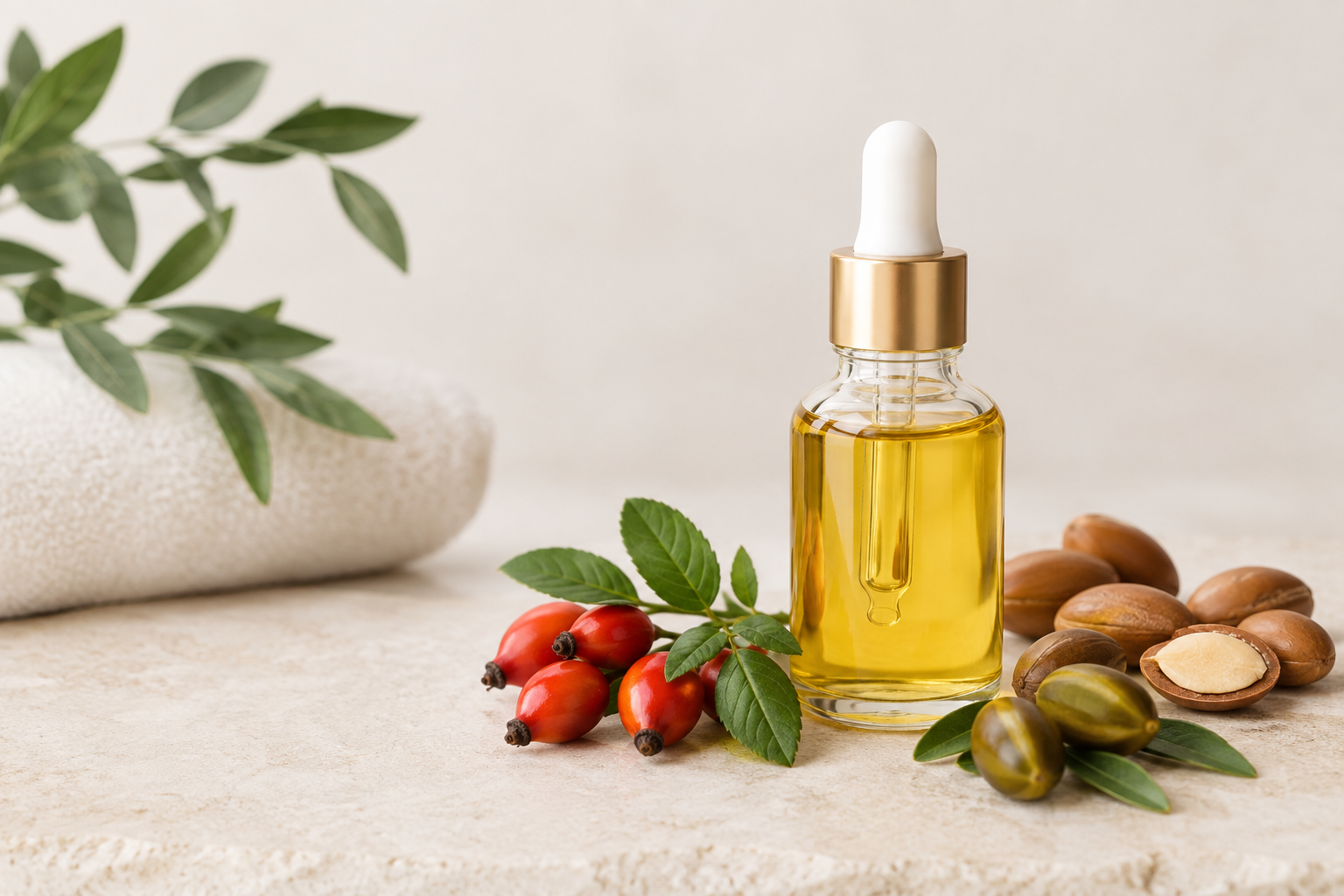
Rosehip seed oil is one of the best natural oils for mature skin because it is lightweight, rich in essential fatty acids, and well suited to dry or moisture-depleted skin. It can help soften the appearance of dry skin, support the skin’s moisture barrier, and leave the complexion looking smoother and more supple. Jojoba oil, argan oil, marula oil, and squalane are also excellent options, particularly for people who want additional moisture and nourishment without a heavy or greasy finish.
The best choice ultimately depends on whether the skin is primarily dry, sensitive, combination, oily, or prone to irritation.
Why Mature Skin Benefits From Facial Oils
Mature skin often becomes less efficient at retaining moisture. This can contribute to a complexion that feels tight after cleansing or looks dull and rough.
Facial oils can provide an emollient layer over the skin, helping reduce the feeling of dryness and leaving the surface softer and more comfortable. Oils can also make a moisturizer feel more nourishing when they are incorporated correctly into a skincare routine.
Rather than treating facial oil as a replacement for every other skincare product, we recommend thinking of it as one component of a complete routine.
A well-designed mature-skin routine may include:
- A gentle cleanser
- A hydrating serum
- A nourishing moisturizer
- A facial oil when additional comfort is needed
- Daily broad-spectrum sunscreen
The goal is to maintain soft, hydrated, resilient-looking skin while minimizing unnecessary irritation.
Rosehip Seed Oil for Mature Skin
Rosehip seed oil is one of the most popular natural oils for mature skin.
It contains linoleic acid, alpha-linolenic acid, and oleic acid, along with naturally occurring plant compounds. Its relatively lightweight texture makes it appealing to people who want nourishment without the heavier sensation associated with some traditional facial oils.
Rosehip seed oil can be particularly appealing for:
- Dry mature skin
- Dull-looking skin
- Skin that feels rough or tight
- People who prefer lightweight facial oils
- Evening skincare routines
- Individuals seeking plant-based skincare ingredients
A few drops can be pressed gently into the skin after moisturizing, or the oil can be used according to the formulation and instructions of the specific product.
Can Rosehip Oil Reduce the Appearance of Fine Lines?
Rosehip oil cannot stop chronological aging, and no natural oil can permanently erase wrinkles. However, well-moisturized skin generally looks smoother and more supple, which can make the appearance of fine lines less noticeable.
The fatty acids in rosehip oil also make it useful as a conditioning ingredient. With consistent skincare and adequate sun protection, maintaining moisture can contribute to a healthier-looking complexion.
For mature skin, we prefer realistic expectations: the purpose of facial oil is primarily to condition, soften, and support the appearance of the skin, rather than promise dramatic anti-aging results.
Jojoba Oil: An Excellent Natural Oil for Mature Skin
Jojoba oil is another excellent choice for mature skin.
Although it is commonly called an oil, jojoba is technically a liquid wax ester. Its composition gives it a texture that can feel remarkably similar to the skin’s natural surface lipids.
Jojoba oil can be especially useful for people who want:
- Lightweight moisturization
- Improved skin softness
- A smooth finish
- Support for dry or dehydrated-feeling skin
- A facial oil that layers easily with other skincare products
Because jojoba oil is relatively versatile, it can be used on its own or incorporated into a broader skincare regimen.
For combination or mature skin that becomes oily in some areas but dry in others, jojoba may be a particularly convenient option.
Argan Oil for Mature Skin
Argan oil is derived from the kernels of the argan tree and is widely used in skincare because of its nourishing fatty-acid profile and naturally occurring antioxidant compounds.
For mature skin, argan oil can provide a richer, comforting feel while helping condition dry areas.
It can be especially attractive for people experiencing:
- Dry cheeks
- Rough-feeling skin
- Seasonal dryness
- A tight sensation after cleansing
- Loss of softness associated with mature skin
A small amount is usually sufficient. Applying too much facial oil can leave the skin feeling excessively greasy without providing additional benefits.
Squalane for Mature Skin
For people who want the silky feel of an oil but prefer an exceptionally lightweight product, squalane deserves consideration.
Squalane is a saturated form of squalene and is commonly used in modern skincare formulations. It spreads easily across the skin and can provide a smooth, lightweight finish.
Squalane may be particularly appealing to mature skin that is:
- Dry but sensitive to heavy products
- Combination
- Dehydrated
- Prone to a tight feeling
- Looking for a simple moisturizing layer
Although squalane can be derived from different sources, many modern skincare products use plant-derived squalane, making it a popular option for plant-focused skincare routines.
Marula Oil for Mature Skin
Marula oil is another luxurious botanical oil that can work well for mature skin.
It contains fatty acids and naturally occurring antioxidant compounds and has a richer texture than some lightweight facial oils.
We may consider marula oil particularly suitable when the skin feels:
- Very dry
- Rough
- Depleted
- Tight
- In need of a richer finishing layer
Because marula oil can feel richer, people with oily or combination skin may prefer using only a few drops, particularly at night.
Evening Primrose Oil for Mature Skin
Evening primrose oil contains a notable amount of gamma-linolenic acid (GLA), an omega-6 fatty acid.
It is commonly incorporated into skincare products designed for dry or sensitive-feeling skin. Its fatty-acid profile makes it an interesting ingredient for formulations intended to condition and soften the skin.
We recommend choosing a properly formulated skincare product rather than assuming that every ingestible evening primrose oil product is appropriate for topical facial use.
Which Natural Oil Is Best for Dry Mature Skin?
For very dry mature skin, we would look for oils that provide a richer, conditioning experience.
Potential choices include:
- Rosehip seed oil
- Argan oil
- Marula oil
- Jojoba oil
- Squalane
The ideal option depends on personal preference and how the skin responds.
Extremely dry skin may also benefit from combining an oil with a water-based moisturizer. Facial oils primarily provide emollience and help reduce moisture loss; they do not replace the water content supplied by a hydrating product.
What Is the Best Facial Oil for Sensitive Mature Skin?
Sensitive skin requires a more cautious approach.
We recommend looking for products with shorter ingredient lists and avoiding unnecessary fragrance or essential oils if those ingredients tend to cause irritation.
Jojoba oil and squalane are often appealing choices because of their relatively simple profiles.
Before applying a new facial oil to the entire face, perform a small-area patch test. Even natural ingredients can cause irritation or allergic reactions in susceptible individuals.
“Natural” does not automatically mean “non-irritating.”
How to Use Facial Oil on Mature Skin
Using too much oil is one of the most common mistakes.
For most facial applications, a few drops are enough.
A simple evening routine can look like this:
Step 1: Cleanse Gently
Use a mild cleanser that removes makeup, sunscreen, and daily buildup without leaving the skin feeling stripped.
Step 2: Apply Hydrating Products
If using a hydrating serum or essence, apply it according to the product directions.
Step 3: Moisturize
Apply your normal moisturizer to help hydrate and condition the skin.
Step 4: Finish With Facial Oil
Press a small amount of facial oil gently over the skin. Avoid aggressive rubbing, particularly if the skin is delicate or easily irritated.
Facial oil can also be mixed with moisturizer if that application method works better for your skin.
Should You Use Facial Oil in the Morning or at Night?
Facial oils can be used either morning or evening, but many people prefer applying them at night.
An evening application provides a simple opportunity to use a richer skincare product without having to layer makeup over it.
If using an oil in the morning, allow your skincare products to absorb before applying makeup. Most importantly, facial oil does not replace sunscreen.
During the daytime, mature skin should still receive broad-spectrum sun protection.
Natural Oils and Sun Protection
Sun exposure is one of the most important environmental factors affecting the visible appearance of aging skin.
Dryness, uneven pigmentation, fine lines, and changes in skin texture can all become more noticeable over time with cumulative ultraviolet exposure.
A natural facial oil should therefore be considered a supporting skincare product, not a sunscreen.
For daytime skincare, we recommend applying a properly formulated broad-spectrum sunscreen as the final protective step.
Can You Mix Different Facial Oils?
Yes, several oils can be incorporated into the same skincare routine, but there is usually no need to use a large number of oils simultaneously.
For example, someone might prefer a formulation combining rosehip, jojoba, and argan oils.
Using a professionally formulated blend can make it easier to achieve a balanced texture and consistent application.
More ingredients do not necessarily mean better results. Mature skin often benefits from a simple, consistent routine.
What to Look for in a Natural Facial Oil
When choosing an oil for mature skin, we recommend considering more than the name of the oil on the front of the bottle.
Look for:
- High-quality botanical oils
- A formulation appropriate for facial use
- Minimal unnecessary fragrance
- Packaging that helps protect the oil from excessive light and air
- Clear ingredient labeling
- A texture appropriate for your skin type
- Freshness and appropriate storage
Oils can oxidize over time, particularly when exposed to heat, light, and air. Proper storage can help maintain product quality.
Natural Facial Oils for Different Skin Types
Different mature skin types may respond differently to facial oils.
| Skin Type | Oils to Consider |
|---|---|
| Dry mature skin | Rosehip, argan, marula |
| Combination mature skin | Jojoba, squalane, rosehip |
| Sensitive mature skin | Jojoba, squalane |
| Dull mature skin | Rosehip, argan |
| Very dry skin | Marula, argan, rosehip |
| Oil-prone mature skin | Jojoba, lightweight squalane |
This table is a starting point rather than a strict rule. Skin can change seasonally, and the same person may need a different texture during a dry winter than during a humid summer.
How Many Drops of Facial Oil Should You Use?
We generally recommend starting with two or three drops for the entire face.
If the skin still feels dry, another small amount can be applied.
Using excessive oil does not necessarily improve the results. Too much can make the skin feel greasy, interfere with makeup, or simply make the product unpleasant to wear.
A little facial oil can go a surprisingly long way.
Common Mistakes When Using Facial Oils
Even an excellent oil may not work well if it is used incorrectly.
Common mistakes include:
- Applying far too much product
- Using heavily fragranced products on sensitive skin
- Assuming oil replaces moisturizer
- Skipping sunscreen
- Applying multiple new products simultaneously
- Using expired or oxidized oils
- Failing to patch test a new product
- Choosing an oil solely because it is marketed as “natural”
The most effective routine is generally the one that is comfortable, consistent, and appropriate for the individual’s skin.
Our Approach to Mature Skin Care at FrankinRose
At FrankinRose, we recognize that mature skin deserves skincare that feels nourishing without being unnecessarily complicated.
Natural oils can be an excellent part of a mature-skin routine because they provide a concentrated way to condition the skin and improve the feeling of softness.
Rather than searching for one ingredient that promises to solve every concern, we encourage a balanced approach centered on hydration, moisturization, gentle cleansing, skin comfort, and daily sun protection.
Rosehip seed oil is an excellent starting point for many people, while jojoba, argan, squalane, marula, and evening primrose oils provide additional options.
Final Thoughts: Choosing the Best Natural Oil for Mature Skin
So, what is the best natural oil for mature skin?
For many mature skin types, rosehip seed oil is one of the strongest natural choices, particularly when the goal is to soften dry skin and provide lightweight nourishment. Jojoba oil is an excellent versatile alternative, while argan and marula oils can provide a richer experience. Squalane is a particularly useful option for those who want a lightweight, silky finish.
The best facial oil is ultimately the one that works comfortably with your individual skin type and fits naturally into a consistent skincare routine.
With the right product, a few drops can help transform the feel of dry, mature skin—leaving it softer, smoother, more supple, and beautifully conditioned.